
Gold and Great Nations
 Gold and Great Nations
 Seldom do we start these daily missives with a meme, but this one’s making the rounds again… and it’s singularly appropriate today.
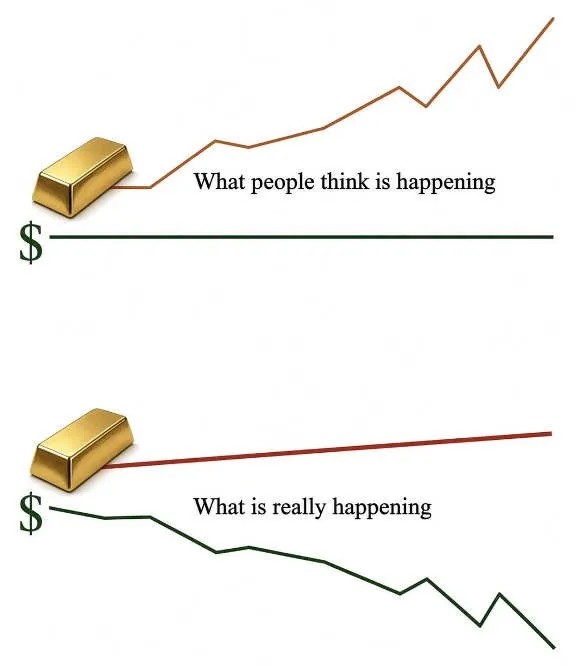
This past Saturday marked the 55th anniversary of the night that President Richard Nixon broke into the nation’s No. 1 TV show to announce he was cutting the dollar’s last tie to gold.
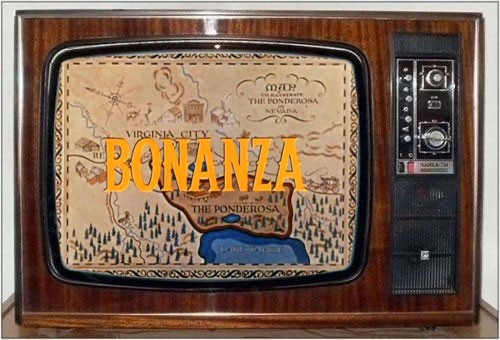 "We interrupt this broadcast to warn you that the dollar you hold in your hand today will be worth only 12 cents in 2026..."
The short story: Between the Vietnam War and LBJ’s Great Society programs, the national debt was mounting quickly. Foreign governments — especially France — were losing confidence in the U.S. dollar. Under the terms of the 1944 Bretton Woods agreement, those governments were exercising their right to trade in dollars for gold.
Uncle Sam’s gold stash was dwindling quickly, so Nixon decided to “close the gold window.”
“Nixon said the suspension of convertibility was ‘temporary,’” recalls our macro maven Jim Rickards with some lesser-known history.
“I spoke with two of the officials present at Camp David with Nixon the weekend of the announcement, Paul Volcker and Kenneth Dam. They both confirmed to me that the suspension was meant to be temporary.
“The plan was to have a new Bretton Woods-style conference, devalue the dollar against gold (and against other currencies such as the yen, the Deutsche mark and French francs) and then return to the gold standard at the new valuations.
“The first part happened — there was an international financial conference in Washington, D.C., in December 1971 — but the rest did not. While the world was waiting for the conference, countries moved to floating exchange rates without reference to gold.
“The Washington conference did devalue the dollar relative to gold (to $42.22 in stages), but there was never a return to a gold standard. We’ve been stuck with floating exchange rates ever since.”
Hold that thought about floating exchange rates. We’ll come back to it in Bullet No. 2…
“Ronald Reagan once told me that no nation has abandoned gold and remained great,” recalls retired Rep. Ron Paul (R-Texas).
It was Nixon closing the gold window that prompted Dr. Paul to make his first run for Congress in 1974.
“America’s experiment with fiat [currency] has led to an explosion of consumer, business and — especially — government debt,” Paul wrote for The New York Sun on the 50th anniversary of Nixon’s fateful step in 2021.
“It has also caused increasing economic inequality, a boom-bubble-bust business cycle and a continued erosion of the dollar’s value.”
As long as the good doctor brings up Ronald Reagan and gold, we can’t resist retelling the following story — because it illustrates how the deep state works.
Reagan formed a U.S. Gold Commission early during his first term to investigate whether the United States should return to some sort of gold backing for the U.S. dollar.
In the end, the commission voted 15-2 against. Paul was one of the two dissenters.
During his second term, Reagan granted a one-on-one interview to the late columnist Robert Novak. From Novak’s 2007 autobiography…
I asked Reagan: “What ever happened to the gold standard? I thought you supported it.”
“Well,” the president began and then paused (a ploy he frequently used to collect his thoughts), “I still do support the gold standard, but —” At that point, Reagan was interrupted by his chief of staff. “Now, Mr. President,” said Don Regan, “we don't want to get bogged down talking about the gold standard.”
“You see?” the president said to me, with palms uplifted in mock futility. “They just won't let me have my way.”
Key point: It was Donald Regan — the Merrill Lynch veteran who was Treasury secretary during Reagan’s first term — who stacked the U.S. Gold Commission with supporters of fiat money.
 Fiat Currency, Imperial Decline
Ron Paul saw the long-term consequences of a fiat dollar from the get-go: “Scheming, speculation and sophisticated tax avoidance have replaced productive efforts, savings and planning for the future.”
Those words come from The Case for Gold, the “minority report” of the Gold Commission — published in 1982 by Paul and his fellow dissenter, the investment banker Lew Lehrman.
What kind of “scheming and speculation” did they have in mind?
Well, that gets us back to those floating exchange rates. “Trading in currencies can now be more rewarding to banks than the conventional business of brokering loans from savings,” they wrote.
“The futures and options market has turned into a giant gambling game. The new markets that have developed since the dollar lost its precise definition reflect the ingenuity of man. Now we see futures sold in currencies, betting on the monetary inflation of various governments.”
Per the most recent figures from the Bank for International Settlements, global currency trading totals $9.5 trillion every day.
And that’s a 44% increase from the $6.6 trillion figure we cited on the 50th anniversary only five years ago!
There’s a symmetry, at once both beautiful and horrible, between this Aug. 15 anniversary and another one.
In 2021 — 50 years to the day after Nixon’s Sunday night announcement — the Taliban recaptured Afghanistan’s capital, Kabul. America’s “forever wars” in the Middle East wound down after 20 years — at least for a while.
War and currency debasement have been tightly linked through much of recorded history. Again, the costs of the Vietnam War contributed mightily to the abandonment of gold and the adoption of a fiat dollar.
By the late Reagan years, the historian Paul Kennedy was warning about the risks of “imperial overstretch.”
When the Soviet Union fell, it was a chance for America to once again be “a normal country in a normal time.”
But most of America’s power elite felt otherwise, and they sought to seize the “unipolar moment.”
They aimed to “kick the Vietnam syndrome once and for all” in the 1991 Gulf War — those were President George H.W. Bush’s words — but to keep the shaky peace, American troops were garrisoned in Saudi Arabia.
Christian troops occupying the land of Islam’s two holiest cities? That was Osama bin Laden’s prime grievance when he decided to embark upon the 9/11 attacks to “bleed America to the point of bankruptcy.”
Per the Costs of War Project at Brown University, the 20-year “war on terror” cost $8.043 trillion — substantially more than the entire national debt on Sept. 11, 2001.
On the day of the 9/11 attacks, gold priced in dollars was $271. As we write this morning, it’s $4,385 — a gain of 16X in 25 years.
Our Jim Rickards is on record that in time gold will reach $10,000.
And it won’t take anywhere near another 25 years to get there.
 Is It Over Yet? (No)
“The oil market keeps trying to declare the Iran conflict over, but it keeps getting it wrong,” says Paradigm analyst Zach Scheidt, in a recent dispatch for Rickards’ Insider Intel.
“Iran just laid out its terms for reopening the Strait, and they're a mouthful: Lift the blockade, withdraw U.S. troops, pay reparations, unfreeze assets. That's not the opening bid of a side ready to stand down.
“Meanwhile crude fell hard last week even with another tanker incident in the mix, on worries that a slowing economy will eat into demand.
“But the physical picture hasn't moved. Infrastructure that got hit earlier in the conflict takes years to rebuild, not weeks. Reserves that governments drained to keep fuel flowing all have to be refilled, which stacks a second wave of demand on top of normal consumption. High demand, constrained supply and a market that keeps pricing in a peace that hasn't arrived.
“Every time crude gives back a few percent on demand fear, the market is arguably handing you a better entry rather than telling you the thesis is broken. That's why energy keeps feeding the inflation story.”
U.S. oil futures trade this morning for $82.81 — on the day that marks an end to the 60-day pause in the conflict that began with the “memorandum of understanding” in June.
As a practical matter, the MoU fell apart weeks ago and there’s been sporadic shooting since. The Strait of Hormuz remains all but closed; the shipping data firm Kpler says no traffic passed through the strait yesterday.
Last Thursday, Vice President Vance said keeping a lid on gasoline prices was now “goal No. 1” in the Iran war. But then Friday, President Trump said he would “never apologize” for higher gas prices. And so it goes.
The national average gas price last week was $4.14. Before the war began, it was $3.07.
Elsewhere, there’s little movement in the major U.S. stock indexes — the S&P 500 down less than 0.2% to 7,773.
But precious metals are regaining their recent mojo — gold up nearly 1% and back over $4,400 while silver is up 2.5% to $66.17.
Bitcoin continues to meander, now $63,610.
We’ll get some middling economic numbers later this week — including the Federal Reserve’s read on industrial production tomorrow.
 Thought for the Day
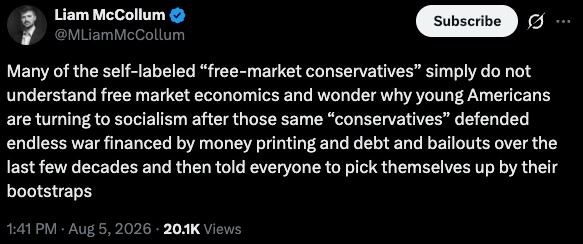
Since we already had a meme up top, here’s a salty hot take that links Bullets No. 1 and 2 with the recent outbreak of generational sniping in our mailbag.
 Mailbag: Sports Betting as Financial Planning
To my surprise, Saturday’s edition — about Gen Zers who look upon sports betting as part of their long-term financial strategy — did not prompt an outpouring of scorn from older generations in our mailbag.
Instead, it brought forth a bevy of nuanced replies exploring the differences between investing and gambling/speculation.
Let’s go…
“Considering that I do both sports betting and serious investing, I thought I'd take a crack at responding to the question you posed,” writes a longtime reader.
“In general for someone starting out, I would advise that they should consider these two different/distinct activities or ways to use your money. I would advise, further, that after you have established a solid foundation in good, long-term investments, you might consider some small portion of your available funds for either wild speculative investments or sports betting. I would put sports betting in the category of wild, speculative investments alongside options trading and startup companies and such.
“Using myself as an example, I have traditional IRAs, Roth IRAs, a Thrift Savings Plan (TSP) from my government career and regular brokerage accounts. Having those established investment vehicles with enough to carry me through my retirement plus have a legacy to leave my children, I now feel comfortable using some of my excess income to speculate on young, growing companies; trade options; and use some of those funds for sports betting, which I consider a hobby.
“For me, actually, trading options (buying and selling) and sports betting are both sort of hobbies. Those are both fun, speculative activities that I enjoy without jeopardizing my retirement or what I plan to leave my heirs.
“So to the question is sports betting ever a legitimate part of a financial strategy, I would say yes, provided one has already established a well-structured, sound financial footing to carry them through their retirement years. Someone starting out should establish a sound basis for retirement income before speculating on sports betting. Take care of your future self and then go have fun.”
“Statisticians like to point out that purchasing lottery tickets is stupid because the odds are you will lose. But if you are poor and see no other way to achieve the good life, it makes sense.
“Sports betting is more complicated: It certainly is possible that some fans are more knowledgeable than others who bet, and consequently would have an advantage similar to that of an informed investor in stocks.
“On the other hand, there are certain biases such as being a fan of a particular team that could easily lead to losses. Fundamentally, though, I don't see how it is different from investing in individual stocks, or in ETFs
“Taleb in The Black Swan documents that pretty much we suck at predictions. But that applies to the stock market just as much as to sports.”
“My mother was dead set against gambling. She would never buy a raffle ticket, although she’d happily give a donation instead.
“I have the same view as she did about gambling, and when I began to dip my toes into trading, I had to think about whether it was different from gambling.
“This is the way I see it. Gambling is when you win at the expense of others. In order for someone to win, someone else has to lose, and that is the moral issue that my mother and I have with gambling. Unfortunately, it’s usually the people who can least afford it that lose.
“Share trading is different, because no one has to lose in order for you to win. Yes, you might lose a lot of money, and losing on a speculative stock seems like gambling.
“But if you put money into a small cap that takes off, you’re not taking that profit from the losses of other people. You’re gaining because value has been created. And if you sell to realize your gains, the person buying the shares doesn’t need to lose. Yes, they may lose if the stock falls, but it may keep going up and they could also win.
“So in my view, there is a fundamental and moral difference between betting and stock trading.
“And a quick story. I was an Uber driver for a few years, and once gave a ride to a group of people heading to the casino. One of them was recounting to his friends about how he had lost $1 million on a Super Bowl bet. He had also won $1 million a different year. But my goodness, he lost $1 million on a single bet and he was still gambling…”
One reader made reference to last Thursday’s guest essay — in which our Zach Scheidt teased out the parallels between poker and trading.
“There are asymmetric bets available in sports betting just like in poker and the stock market. It’s not necessarily for me, but I can see how well-researched strategic sports bets could be part of a trading strategy. Especially for a generation who has been taught that Wall Street is nothing more than one giant casino.”
“I feel that $100 on a stock that doesn’t pay a dividend above the true rate of inflation is pure and simple gambling,” writes our final correspondent.
“I worked hard for my money and for me investing means getting my money back when I want it, with its purchasing power intact. And, if possible, a few extra points on top of that would be a really nice bonus.”
Dave responds: You set a very high bar at a time the S&P 500 dividend yield sits at historical lows approaching 1% and the official inflation rate is 3.4%!


